
Waterproofing a Concrete Spa Before Glass Mosaic Tile
Covering an incompatible waterproofing assembly with glass mosaic can mean removing a finished spa to reach the failed layer. Before tiling, review the concrete, membrane, adhesive, glass backing and grout as one documented system for the intended immersion and heated-water conditions.
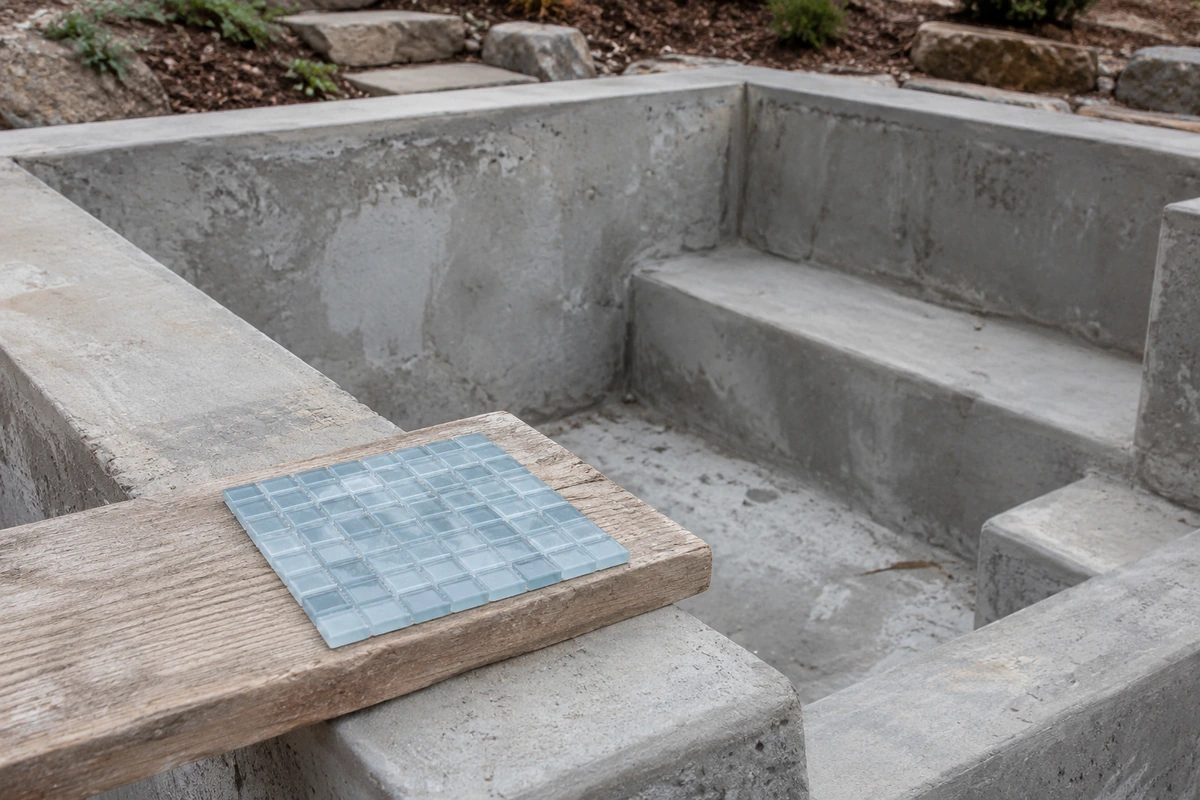
Waterproofing a concrete spa before mosaic tile means selecting compatible layers and checking them before they disappear beneath the finish. A waterproof membrane, crack isolation, glass bonding and grout perform different jobs; a pool label or ANSI number does not confirm the whole assembly for heated water. This guide provides a specification review, based on public technical documents rather than our own tests, with product-specific examples and separate checks for membrane testing, grouting and final immersion.
Quick Specs: what must be known before selection?
Start with the operating conditions and the exact glass product, then request the documents that connect them to each material layer. Mark an unanswered field as needing confirmation. A general swimming-pool use statement should not silently become permission for every heated spa, glass backing or cleaning chemical.
Scroll horizontally to see all columns →
| Input or item | Typical value or source | Why it matters |
|---|---|---|
| Water temperature and operating cycle | Project brief; manufacturer’s written service confirmation | Installation temperatures do not establish hot-water use limits. |
| Water treatment and cleaning | Planned chemicals and maintenance instructions | Compatibility depends on actual exposure, not simply “epoxy.” |
| Glass and mounting method | Glass model, backing information and installation instructions | Adhesive must bond to the supplied assembly in submerged service. |
| Concrete and moisture conditions | Substrate acceptance records and membrane requirements | A finish system cannot resolve structural movement or unsuitable back pressure. |
| Membrane, adhesive and grout | Current named-product TDS and complete installation documents | Each layer needs explicit use permission and compatible interfaces. |
| Joints, penetrations and release checks | Project details; curing and test records | Continuous waterproofing and separate readiness checks must survive handover. |
Keep this material submission within the architectural spa design and construction brief, so the designer and installer review the same conditions.
Takeaway: Select from documented project conditions; leave missing permissions visible.
What do the ANSI numbers establish?
The ANSI material numbers identify different performance categories, rather than a ladder from ordinary to better waterproofing. Use them to read what the proposed material does, then verify the named product’s intended uses and restrictions. The public titles do not approve a particular heated-spa assembly or repair a structural problem.
Scroll horizontally to see all columns →
| Number | Public scope, paraphrased | What still needs confirmation |
|---|---|---|
| ANSI A118.10 | Bonded waterproof membranes beneath thin-set tile and stone | Pool/spa immersion, substrate and the selected finish system |
| ANSI A118.12 | Crack-isolation membranes beneath tile and stone | Permitted movement; it does not eliminate movement joints |
| ANSI A118.15 | Improved modified dry-set cement mortar | Specific glass, membrane and submerged/heated use |
| ANSI A118.3 | Specified epoxy tile-setting and grouting material categories | Whether the product is an adhesive or grout, plus its use limits |
This table paraphrases TCNA’s public ANSI material-specification titles, reviewed October 10, 2026. It does not reproduce the paid standards’ tests or acceptance clauses. Waterproofing and crack isolation can be combined in a named product, but they remain distinct functions.
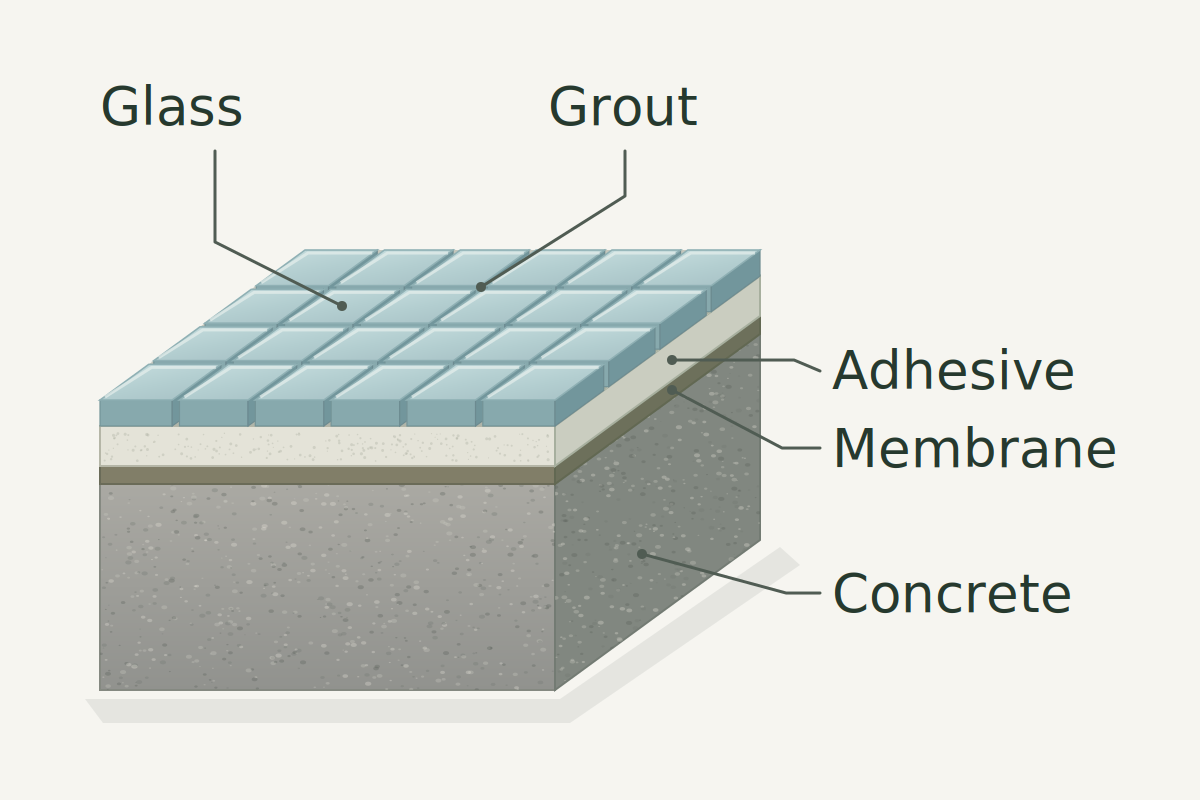
TCNA’s crack-isolation FAQ also explains why flexible joints remain necessary. Their layout depends on project movement and exposure; this guide supplies no universal spa joint spacing. Resolve shell thickness, steel and structural cracks through the concrete spa shell specification guide before reviewing finishes.
Takeaway: Read the standard category and the product’s explicit use permission as separate checks.
Which membrane form can fit a tiled spa?
Screen a membrane first for explicit submerged use, then for how it forms a continuous barrier around the spa’s actual geometry. Liquid, sheet and polymer-cement systems require different installation checks. Appearance, flexibility or a waterline-only treatment cannot substitute for the selected system’s complete underwater detail and substrate requirements.
Scroll horizontally to see all columns →
| Form to review | Important inspection question | Document to obtain |
|---|---|---|
| Liquid-applied | How are thin spots, pinholes, corners and wet-film thickness checked? | Coating sequence, thickness and detail-treatment instructions |
| Sheet | How are seams sealed and corner overlaps kept compatible with small glass tiles? | Submerged-use permission and seam/transition details |
| Polymer-cement | What mixing, application, curing and finish-bond requirements apply? | Named-product pool/spa instructions and approved interfaces |
The LATICRETE Swimming Pool and Spa Design Manual (2023, section 7.4) describes differing membrane forms and cautions that sheet products require submerged-use verification. It also discusses seam and corner buildup affecting finish appearance. These are review questions, not evidence that all products in any category suit a spa.
A concrete example is HYDRO BAN, DS-663-0926 (September 2026), which lists swimming pools, spas and hot tubs and A118.10/A118.12. Its submerged-installation limitation calls for an uninterrupted waterproof pan; coating only the waterline is not the described system. This named example establishes no blanket approval for unrelated membranes.
The same September 2026 sheet gives each wet coat as 0.015–0.022 inches (0.4–0.6 mm), and the combined dried coating as 0.020–0.030 inches (0.5–0.8 mm). It calls for a wet-film gauge. Wet and dry thickness are different quantities: retain measurement records against that product’s full instructions rather than judging thickness by color or borrowing these figures for another membrane.
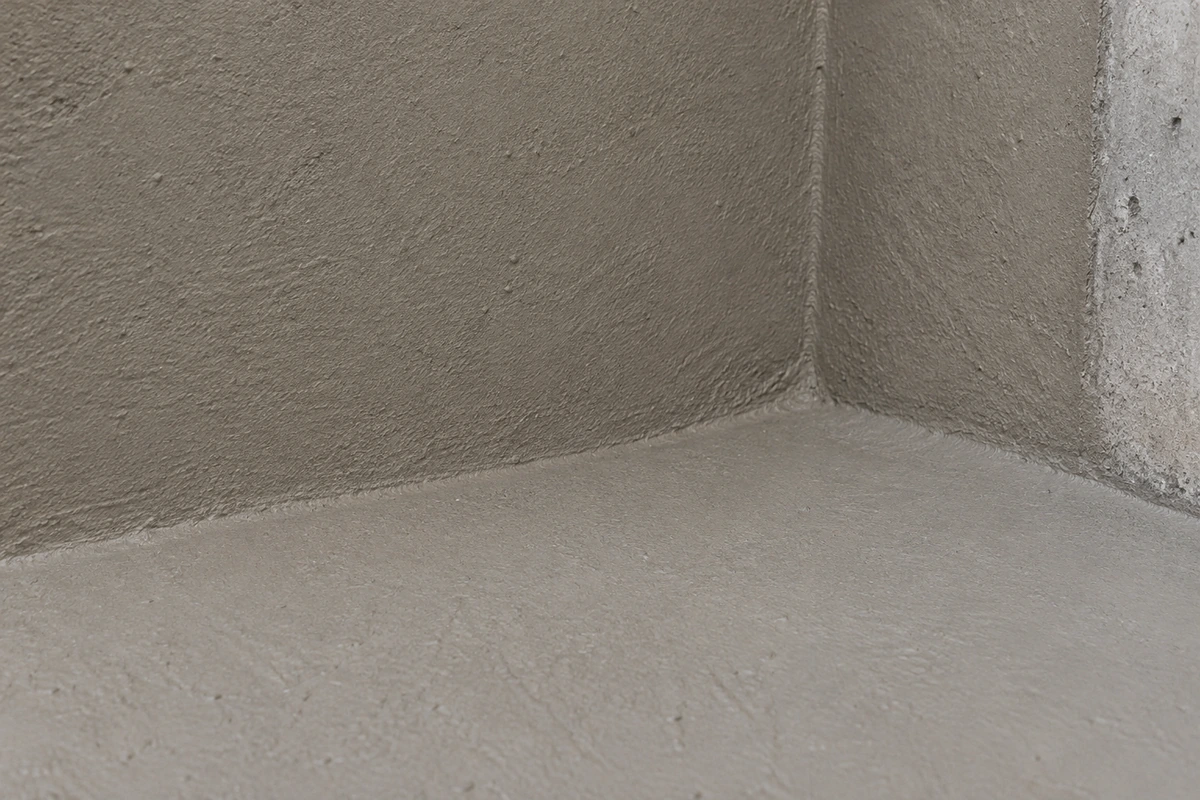
Check exposed walls and pool interfaces against the raised spillover spa interface guide. List pipe and fitting penetrations with the pool and spa equipment plan; request the membrane-to-fitting detail for each actual interface, rather than inventing a generic seal.
Takeaway: Choose a documented submerged system and inspect its continuity, thickness and junctions before covering it.
Modified cement mortar or epoxy adhesive?
Choose the adhesive by the supplied glass, its mounting materials and the approved underwater system, rather than by the strongest-sounding name. Modified cement mortar and epoxy adhesive are different bonding routes. Either needs named-product confirmation for the actual interfaces and service conditions; epoxy adhesive should not be mistaken for epoxy grout.
Glass Tile Adhesive Lite, DS-36628-0726 (July 2026), is a useful documented cement-mortar example: the sheet describes interior, exterior and submerged glass installation and lists A118.15. It also directs users to check glass suitability with the glass manufacturer for the specified membrane, thin-set and grout. A118.15 alone does not grant the same uses to every mortar carrying that number.
For resin, mesh-backed, painted or coated glass, that sheet specifically calls for suitability verification and identifies LATAPOXY 300 as its alternative adhesive route. Read the limitation alongside the glass instructions. Changing adhesive does not establish that a backing glue will remain suitable in the proposed spa water.
LATAPOXY 300, DS-633-0926 (September 2026), lists A118.3 and concrete among its substrates, but its explicit pool/spa-vessel description refers to stainless steel. The 2023 design manual describes submerged adhesive use. These statements support asking about an epoxy route; they do not certify the specific glass-on-membrane-on-concrete heated-spa assembly. The current sheet also says the adhesive is not a grout.
Ask the system and glass manufacturers to identify the exact combination, hot-water exposure and chemical conditions in writing. Record the intended heating and cover cycle through the spa heating and energy planning guide. A temperature allowed during mixing or installation is not evidence of a continuous immersed-use temperature limit.
Takeaway: Use adhesive and glass compatibility documents to choose a route; a material category cannot approve the assembly.
What must the glass and substrate review catch?
The review must identify what actually touches the adhesive and whether the prepared surface lets the mosaic bed evenly. Confirm the glass backing, substrate preparation and intended profile before installation. Then use a sample and lifted-tile checks to assess appearance and adhesive transfer while the bond layer is still accessible.
The 2023 pool/spa design manual discusses backing glues that can interfere with adhesion or soften in water. This is why a mesh-backed sheet needs evidence for its actual backing, rather than a blanket ban on all mesh or an assumption that epoxy rescues every assembly. Keep the glass model and mounting instructions with the sample.
Glass Tile Adhesive Lite’s July 2026 preparation instructions require a sound, clean receiving surface and treatment of rough or uneven concrete. Have the project team distinguish design curvature and drainage profiles from unintended unevenness. A flat-slab tolerance copied onto a curved bench will not explain whether the intended finished profile is correct.
Approve repairs and smoothing materials before the membrane goes on; do not ask the bonding mortar to conceal an unreviewed profile change. Coordinate the finish line with the in-ground spa geometry and seating plan, and settle fitting positions using the hydrotherapy jet and body-positioning guide before the finish restricts access.
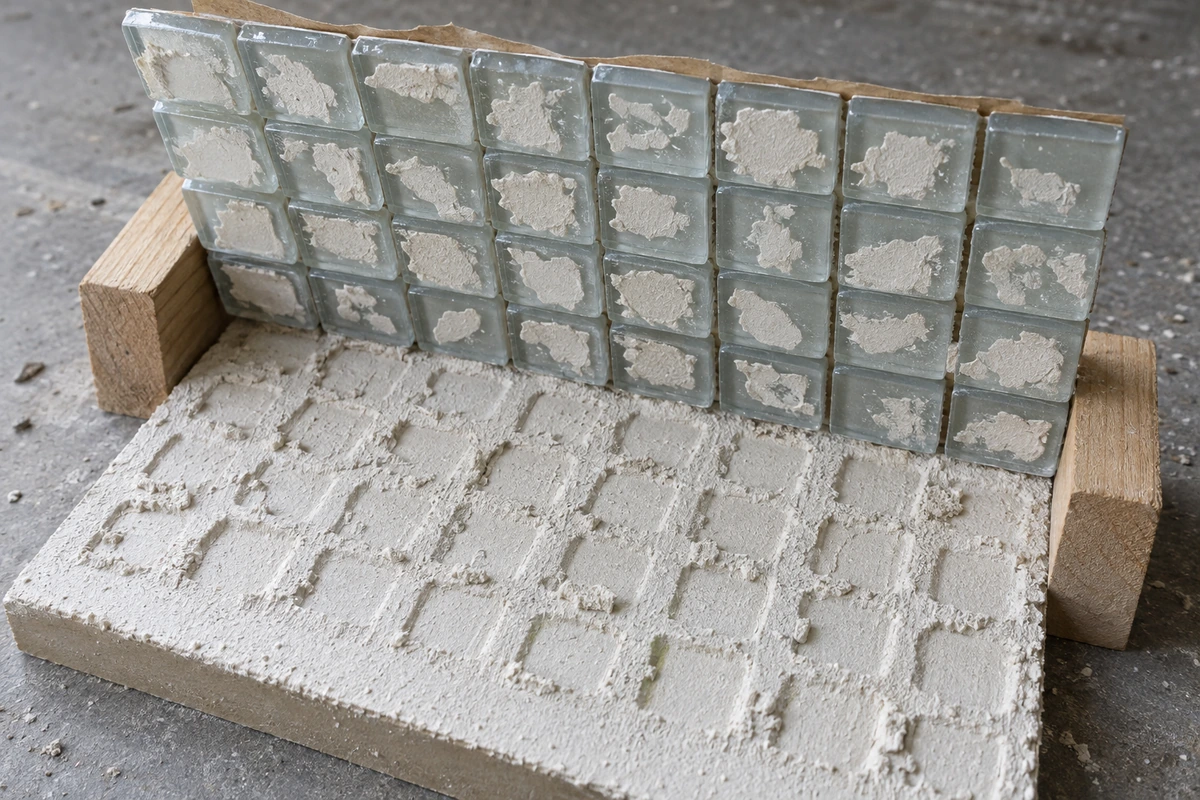
The same adhesive sheet calls for full bedding, flattened mortar ridges and periodic removal of tile to inspect mortar transfer. Transparent glass can reveal mortar ribbons. Use a sample to review the chosen adhesive color, ridge visibility, mounting material and finished grout together; attractive face color alone does not establish adequate bonding.
Takeaway: Check the backing, prepared profile and bedding transfer as well as the visible glass finish.
Does epoxy grout prevent efflorescence?
Epoxy grout does not replace the waterproof membrane or establish that every white deposit is efflorescence. Review grout compatibility and the water-migration route separately. Reducing an identified moisture pathway can lower risk, but selecting an epoxy joint filler cannot justify a promise that the glass finish will never develop white residue.
SPECTRALOCK PRO Premium Grout, DS-681-0926 (September 2026), lists glass tile, swimming pools, fountains and wet areas and references A118.3. It expressly distinguishes epoxy grout from a waterproofing membrane. Its high-temperature and harsh-chemical limitations still need clarification for the proposed spa; pool suitability is not an unlimited service envelope. For areas exposed to high temperatures, the same limitations entry points to a grout meeting ANSI A118.5, such as SPECTRALOCK 2000 IG; check that grout’s own data sheet against the spa’s conditions before treating it as the answer.
For this product, the sheet also warns that some delicate glass may be scratched during grouting and requires a small test area. Its Glow additive is excluded from submerged use. Review the exact grout formulation and additives on the sample, rather than approving every decorative option under the same product-family name.
TCNA’s white-residue FAQ explains efflorescence as dissolved minerals transported by water and left as moisture evaporates. It also discusses other residue mechanisms. The FAQ mainly addresses tile/grout installations generally; it cannot diagnose a particular spa’s white mark, water loss or glass bond from a photograph.
Before covering, ask where moisture may originate and whether it can migrate from behind the shell. HYDRO BAN’s September 2026 limitations exclude negative hydrostatic pressure and excessive vapor transmission. A positive-side coating choice does not resolve those conditions. For existing symptoms, retain water-treatment and cleaning records with the pool and spa maintenance information before choosing a cleaning or repair intervention.
Takeaway: Treat grout selection, water migration and residue diagnosis as connected but separate questions.
What is the curing and testing sequence?
Release each stage against its own material instructions and recorded conditions. The membrane’s readiness for a flood test, the adhesive’s readiness for grouting and the completed finish’s readiness for immersion are separate milestones. A fast membrane label cannot release fresh grout, and a touch-dry surface cannot establish the whole system’s readiness.
Scroll horizontally to see all columns →
| Stage | Conditional manufacturer example | What it does not establish |
|---|---|---|
| Membrane ready for testing | HYDRO BAN DS-663-0926, September 2026: typically 2 hours after final cure at 70°F (21°C), 50% relative humidity; colder or wetter conditions take longer. | The test duration, or permission to fill a completed freshly tiled spa |
| Adhesive ready for grout | Glass Tile Adhesive Lite DS-36628-0726, July 2026: minimum 24 hours curing at 70°F (21°C) before grouting. | Readiness for submerged use or a different adhesive’s schedule |
| Grout ready for immersion | SPECTRALOCK PRO Premium Grout DS-681-0926, September 2026: 10 days at 70°F (21°C) before submerged/steam use. | Approval of every epoxy, all temperature conditions or the entire system |
These examples come from the membrane, adhesive and grout sheets, not a single approved project schedule. The HYDRO BAN installation instructions, DS 663.5 (December 2024), make the flood-test starting point the uniformly cured olive-green membrane. The grout instructions, DS 681.5 (April 2024), separate traffic and tack-free times from the submerged-use cure.
Use the following order as an editorial review checklist, adapted to the selected system’s complete instructions:
- Accept and document the substrate, moisture conditions and compatible preparation.
- Complete the continuous membrane and its specified corner, joint and penetration treatments.
- Meet the membrane’s cure conditions, inspect it and perform the specified test; record conditions and results.
- Resolve failures, repeat the relevant curing and testing, and only then release the area for covering.
- Install the approved glass adhesive and mosaic, checking bedding and the agreed sample appearance.
- Meet the adhesive’s grouting requirements; complete the specified grout and flexible joints.
- Confirm that all applicable materials meet immersion and commissioning conditions before final filling and heating.
Have the project team define test method, duration, responsibility and acceptance in advance. The 2023 design manual places testing after membrane and penetration treatment with components cured; the public documents reviewed here do not supply a universal spa test duration. The manual notes there are no known flood-test standards for pools, names ASTM D5957 as a basic guide, and says tests generally run 24–72 hours with continuous monitoring; treat that as a general range, not a spa acceptance criterion. Keep startup safety checks within the pool and spa safety review.
Takeaway: Track separate release events and their conditions; do not turn one short wait into a whole-spa filling date.
What belongs in the handover file?
Keep the documents that connect the supplied materials to the intended conditions and the observations made before covering them. A list of brand names cannot explain a concealed interface later. Record unresolved questions with the person responsible for answering them, and retain the version accepted for the actual installation.
Scroll horizontally to see all columns →
| Record | What it should explain |
|---|---|
| Material and glass submission | Exact products, TDS revisions, glass backing and written compatibility for water temperature and chemicals |
| Substrate and junction review | Preparation, moisture findings, approved repairs, movement joints and penetration details |
| Membrane inspection | Product-specific thickness observations, continuity, defects and corrections |
| Sample and bedding checks | Approved appearance, grout scratch check, backing review and observed mortar transfer |
| Test and release record | Dates, conditions, method, results, repairs, retesting and authority to cover or fill |
Photographs help record visible conditions; they do not prove concealed thickness, compatibility or a passed test by themselves. Ask the design and installation team to close missing permissions before covering. This journal provides the review questions; the responsible project parties supply the assembly approval and acceptance records.
Takeaway: Handover should preserve the accepted system and the checks that the finished glass can no longer reveal.
When this does not apply
This guide reviews bonded glass mosaic finishes over a site-built concrete spa; it does not prescribe structural repairs or certify a shell. Pause this selection process where cracks move vertically, structural movement is unresolved, back pressure exceeds the membrane’s use limits, or the glass and heated-water permissions remain unconfirmed.
Factory shells, steel vessels and other substrates need their own documented systems. Commercial facilities also need the applicable project and operational requirements reviewed. A membrane’s crack-isolation claim should not be used to classify an existing crack or conceal a missing structural assessment.
If a current TDS and an older FAQ disagree, request a written technical clarification for the intended assembly. Do not select the more permissive statement or combine incompatible revisions. Unknown maximum water temperatures and chemical exposures remain unknown until the relevant manufacturer confirms them.
Takeaway: Resolve excluded substrate, movement and service conditions before returning to finish selection.
Frequently asked questions
These questions address adjacent decisions that a material category cannot settle: protection before tiling, primers, coating count and epoxy restrictions. Read each answer with the selected product’s full instructions. A short answer can identify the next document to check, but it does not grant permission for an unspecified heated-spa assembly.
How long can you leave waterproofing before tiling?
Use the membrane’s own exposure limit and protection instructions. For example, HYDRO BAN DS-663-0926 (September 2026) limits unprotected sun or weather exposure to 30 days. That limit is not a minimum curing period or permission to tile over a dirty, damaged or insufficiently cured coating.
Do you need to prime over waterproofing before tiling?
Do not add a primer unless the selected assembly’s instructions require it. A primer used beneath a membrane is a different interface from a coating added above it. Check the membrane and adhesive instructions together; an extra coating needs compatibility confirmation rather than an assumption that it improves bonding.
How many coats of waterproof membrane should you apply?
There is no single coat count that applies to every waterproof membrane. HYDRO BAN DS-663-0926 (September 2026) specifies two main coats over the substrate, including pre-treated areas; its DS 663.5 installation instructions (December 2024) describe corner, joint and penetration pre-treatment separately. Those local treatments do not replace either main coat, and this sequence must not be transferred to another product.
Is there a downside to epoxy grout?
Yes: mixing, working time and cleanup require careful planning. For SPECTRALOCK PRO Premium Grout, DS 681.5 installation instructions (April 2024) prohibit adding water to the grout or re-tempering it, note that warmer conditions shorten working time, and require initial and final washes. Prepare the specified wash water, cleaning additives and sponges before mixing; water used for cleanup is not permission to dilute the grout.
Is epoxy grout heat-resistant?
The epoxy category alone does not establish a continuous hot-water limit. The September 2026 SPECTRALOCK PRO Premium Grout sheet excludes high-temperature applications without defining a numerical limit there. Ask for confirmation against the spa’s actual water temperature, chemical treatment and cleaning conditions rather than borrowing an installation-temperature range.
Can epoxy grout be submerged in water?
Some named epoxy grouts permit immersion after curing, but that does not permit installation into standing water. SPECTRALOCK PRO Premium Grout DS 681.5 instructions (April 2024) require tile surfaces and open joints to be free of standing water and cleaned surfaces to dry thoroughly before grouting. Its DS-681-0926 sheet (September 2026) separately sets the submerged-use cure shown in the curing table above. Check both installation and service conditions; neither establishes an unconfirmed heated-spa approval.
Takeaway: Apply the answer to the named product and its conditions; verify any missing project permission.
Method and sources
This specification review was compiled from public standards information and manufacturer documents, accessed October 10, 2026. It organizes material functions and release checks, rather than reporting our tests or comparing brand performance. Named products illustrate documented conditions; they are not recommendations or a certified combination for your spa.
- TCNA public ANSI standards list: material titles and scope only; the paid standards and current Handbook were not reviewed in full.
- TCNA crack-isolation FAQ and white-residue FAQ: public explanations, without displayed publication dates; accessed October 10, 2026.
- LATICRETE Swimming Pool and Spa Design Manual, 2023: glass/mounting discussion in section 5.3, membranes and testing in section 7.4, adhesive discussion in section 7.5.
- HYDRO BAN DS-663-0926, September 2026, and DS 663.5 installation instructions, December 2024.
- Glass Tile Adhesive Lite DS-36628-0726, July 2026; LATAPOXY 300 DS-633-0926, September 2026.
- SPECTRALOCK PRO Premium Grout DS-681-0926, September 2026, and DS 681.5 installation instructions, April 2024.
Numerical examples mainly come from one manufacturer whose complete documents were available; they are not industry averages. Current product sheets take priority for these examples, while conflicts require technical clarification. The review does not establish a universal heated-water temperature ceiling, chemical limit or filling date. Our editorial sourcing policy explains the journal’s evidence approach.
Last substantive update: October 10, 2026.
Takeaway: Use the dated documents to verify the proposed system, and keep unconfirmed limits explicit.