
In-Ground Spa Design
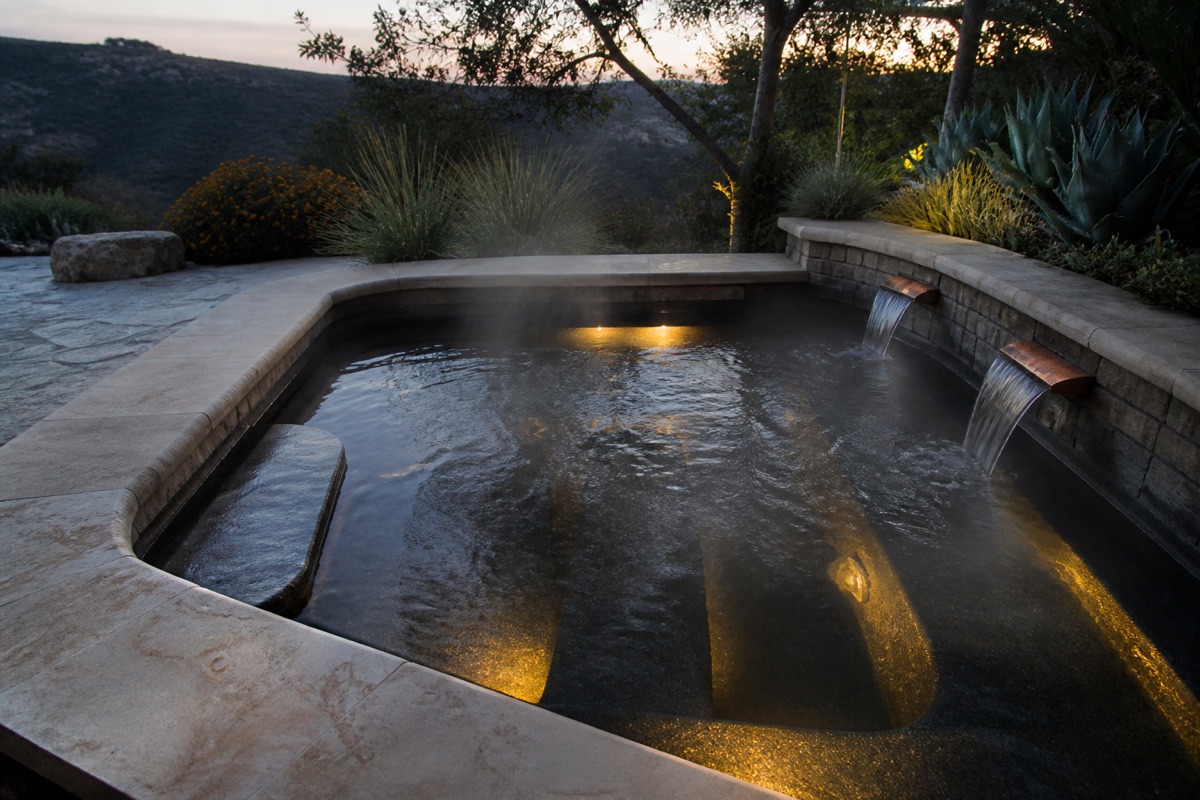
Choosing the shell outline before seating, jet zones and heating loads are resolved can leave the benches and pipework needing revision. Draw those sections and operating duties first, then confirm the shape and cover interface. This checklist covers outdoor built-in aquatic spas.
For a raised spa connected to a swimming pool, review the spillway, waterproofing and waterfall commissioning checklist before approving the finish, circulation modes and cover interface.
Choosing between travertine, granite and bluestone for the spa edge? Use the natural stone coping comparison and evidence checklist to check samples for sun, salt, water treatment and edge profile.
A full-perimeter spill is a different edge from a single waterfall into the pool. Before the rim height is set, fill in the perimeter overflow spa collection and mode record.
Before fixing seat elevations, use the spa depth and waterline schedule to distinguish total water depth from water above each seat and record the proposed section.
Considering an elevated or rooftop vessel? Prepare the rooftop spa structural-review and roof-interface records before confirming the location and support arrangement.
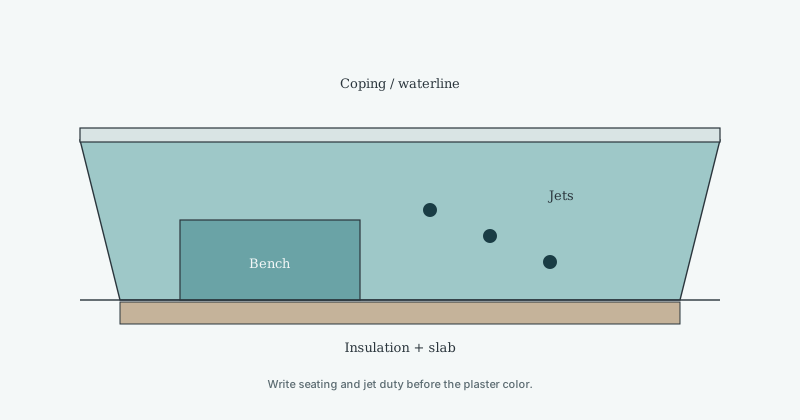
Which seating dimensions need a section?
Show the finished waterline, bench height, water depth above the seat, leg clearance, entry steps and handholds. Record intended users and how many seats are occupied together. Ask the designer to resolve access requirements for the project rather than copying a catalog outline.
Use the seating row below to record the section number and the unresolved dimension. A plan view alone does not show how a person fits the bench.
Before fixing the shell outline, use the custom inground hot tub dimension record to coordinate seat depth, step benches, occupied footwell space and cover-recess allowance on the same finished drawing.
How do you confirm the jet circuits?
Mark each jet zone and the seats it serves. Record the manufacturer’s required flow, the pipe route and calculated head, then have the designer check the pump curve for the intended combination of open jets. One pump is not inherently wrong; accept or reject that arrangement from the hydraulic check, not from a jet count.
Keep the filtration circuit, jet duty and any air system distinct in the brief. A product name or pool volume alone is not a pump specification.
How should heat and the cover be recorded?
List spa water volume, target temperature, climate, wind exposure, hours uncovered and proposed insulation. Ask the heating designer to use those inputs when confirming shared or independent heating. Use the energy hub for the operating record rather than choosing a generic heater output.
Choose the cover for the actual spa opening. Thermal retention, safe access and compliance are separate checks; record the applicable cover documentation and local barrier decision alongside the heating inputs.
When does this checklist not apply?
Portable hot tubs and salon interiors need different specifications. These notes do not determine shell dimensions, pump performance or local compliance. Use the existing architectural spa guide for the seating, suction and design-responsibility checklist before approving construction.
In-ground spa design record
Scroll horizontally to see all columns →
| Topic | Input / document to obtain | Project record |
|---|---|---|
| Seating | Users, waterline, bench and leg clearance | Section / dimensions / reviewer: ____ |
| Jets | Zone flow, pipe head and pump-curve check | Active zones / calculation / reviewer: ____ |
| Heat | Volume, setpoint, wind, uncovered hours and insulation | Heating basis / shared or independent: ____ |
| Pool connection | Connected or isolated water; operating modes | Hydraulic drawing / controls: ____ |
| Cover and barriers | Opening, thermal needs, safety evidence, local decision | Cover document / authority / reference: ____ |
Related hubs
- Pool and Spa Design
Planning a swimming pool and spa as one system: layout, levels, circulation, and the plant room.
- Automatic Pool Covers
Types, tracks, retrofit versus new-build, spa covers, safety, and energy for specifying an automatic pool cover.
- Pool Energy Efficiency
Evaporation, heat loss, covers, solar heating, and water conservation with stated assumptions.
Standards to verify
- ASTM safety-cover specification
Safety-cover standard publisher link. Confirm the product evidence and locally applicable edition; no edition is prescribed here.
- CPSC residential barrier guidance
Publication 362, April 2023. Guidance distinguishes barriers from supervision and directs readers to local requirements; it is not a project approval.
- Architectural in-ground spa design checklist
Existing journal guide for sections, suction review and project responsibilities. No universal engineering dimensions are supplied.
- Natural stone coping comparison
Journal guide comparing travertine, granite and bluestone coping evidence: exposure, water treatment, edge profile and sample approval.
Questions
- What is the difference between an outdoor spa and a hot tub?
- In this journal, an inground spa is a built-in vessel, often tied to a pool. A portable hot tub is a factory unit on a pad. The design problems overlap on heat and covers, not on shell structure.
- Do I need a dedicated automatic spa cover?
- Not necessarily. A thermal cover addresses heat retention, while a safety cover needs product-specific evidence against the applicable safety standard, such as ASTM F1346 in a US specification. Automatic operation is a convenience feature, not proof of safety performance. Local authorities decide whether a fence or another barrier is required; do not treat a thermal lid as that approval.
- Is a portable hot-tub cover good enough for an inground spa?
- Only if it is specified for that opening and can be used as designed. A leftover lid from another vessel is not a specification. If the spa is outside the pool cover path, budget a lid with the spa, not after tile.